
Nanotubes are known to have the strongest and stiffest fibers with exceptional tensile strength and higher modulus of elasticity, researchers have been very interested in studying their nonlinear vibrations. Nonetheless, using nanotubes to partially substitute reinforcing material has emerged as a revolutionary approach for applications of the future. This work examines the nonlinear vibration study of single-walled carbon (NTs) with geometric imperfection supported on linear and nonlinear Winkler and Pasternak Foundations in a thermal-magnetic-electrostatic environment under the influence of Casimir Force. The nonlinear mathematical model for this work is formulated using the Hamiliton principle, Euler-Bernoulli elasticity theory, and non-local elasticity beam theory. The Galerkin decomposition approach is used directly to break down the nonlinear partial differential equation of motions into two separate components, that is spatial and temporal parts of nonlinear duffing equations of motions. An approximate analytical expression of the fundamental natural frequency is presented by modern asymptotic approach namely Iteration Perturbation Method (IPM). The method is used to solve the resulting nonlinear mathematical model and the following solutions were obtained that is the natural frequency of vibration, nonlinear frequency ratio and dynamic response analysis. Moreso, parametric study was conducted on the obtained semi-analytical solutions and the effects of the following parameters such as magnetic, thermal, electrostatic force, Van der Waals force, Casimir force, linear foundation, nonlinear foundation, Pasternak foundation and mass on stability and dynamic responses on four different boundary conditions considered. Afterwards, the outcomes are then compared with existing literature and found to be completely consistent.
| Published in | Engineering Science (Volume 10, Issue 2) |
| DOI | 10.11648/j.es.20251002.12 |
| Page(s) | 32-58 |
| Creative Commons |
This is an Open Access article, distributed under the terms of the Creative Commons Attribution 4.0 International License (http://creativecommons.org/licenses/by/4.0/), which permits unrestricted use, distribution and reproduction in any medium or format, provided the original work is properly cited. |
| Copyright |
Copyright © The Author(s), 2025. Published by Science Publishing Group |
Magnetic, Thermal, Iteration Perturbation, Casimir, Van Der Waal, Elastic Foundation, Electrostatic Force, Single-Walled Carbon Nanotubes

 (1)
(1)  =
=  , where
  is linear Winkler-type and
  is non-linear Winkler-type. Substituting back into equation (1) gives:
  (2)
(2)  , initial stresses as
  , parameter induced by residual surface stress as
  and change in temperature is
  as well as the electrostatic force acting on the system, van der Waal force and Casimir force which are denoted as;
  .and
.and  . Substituting back into equation (2) yield;
 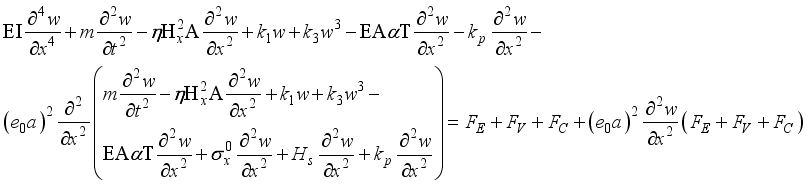 (3)
(3) 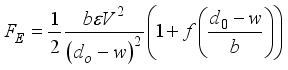 ,
, 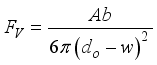 and
and 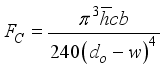
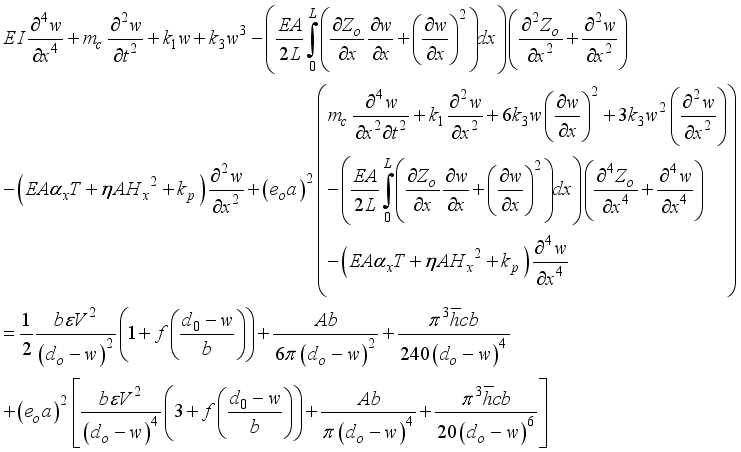 (4)
(4) 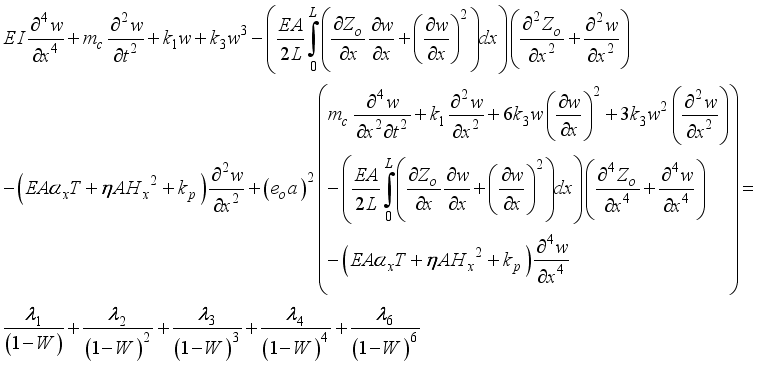 (5)
(5)  (6)
(6)  (7)
(7)  (8)
(8)  (9)
(9)  (10)
(10) 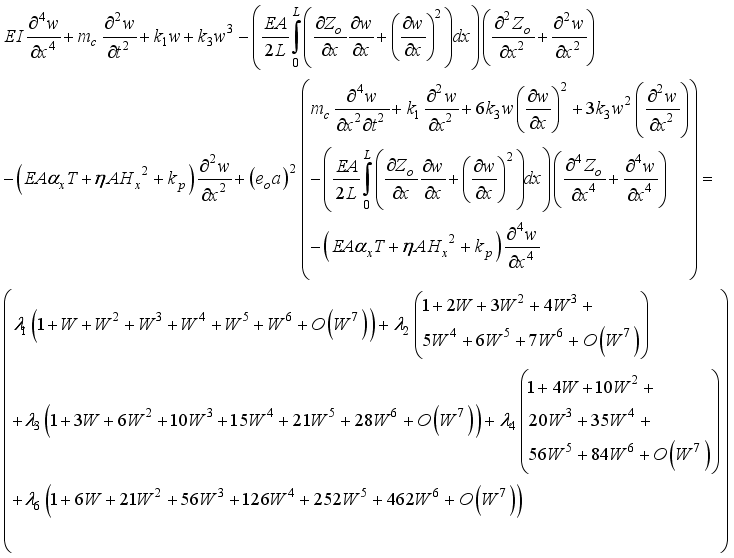 (11)
(11)  : Magnetic field strength
  : Nonlocal material constant
  : Plank constant
  (12)
(12)  (13)
(13)  (14)
(14)  .(15)
.(15) Cases | Mode shape, |
| Value of |
|---|---|---|---|
Pinned-Pinned supports |
showing pinned-pinned supports. |
|
|
Clamped-Clamped supports |
showing clamped-clamped supports. |
| 4.730041 |
Clamped-Pinned supports |
showing clamped-pinned supports. |
| 3.926602 |
Clamped-Free supports |
showing clamped-free supports. |
| 1.87510 |
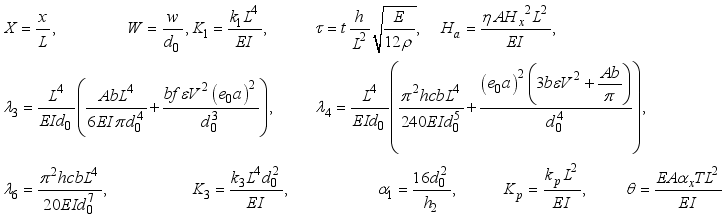 (16)
(16) 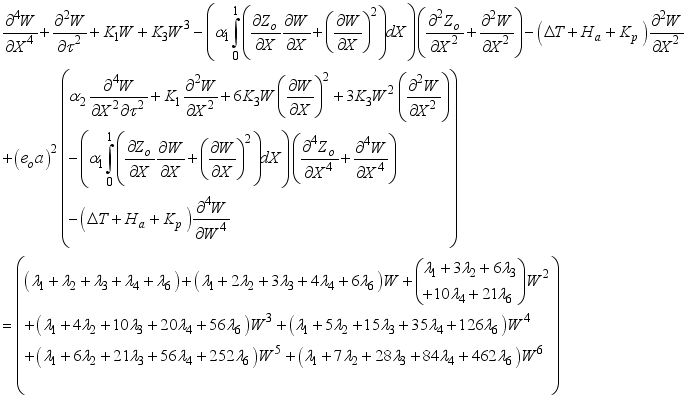 (17)
(17)  (18)
(18)  , chosen to meet the end supports conditions requirements is shown in Table 1. Remember that the Galerkin transform, one parameter at a time, is defined as follows:
 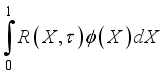 (19)
(19)  . The decomposition equation is as follows when Eq. (19) is applied to the governing equations:
 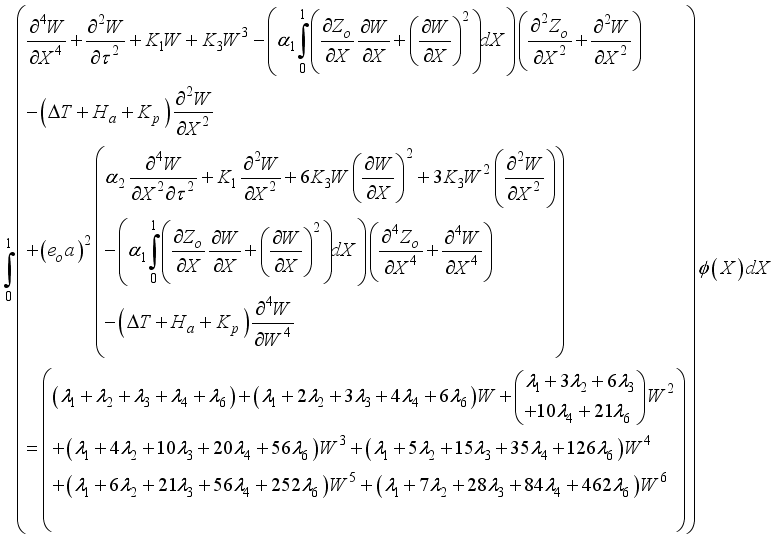 (20)
(20) 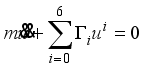 (21)
(21)  (22)
(22)  ,
, 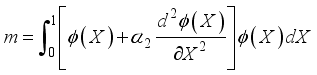 (23)
(23)  (24)
(24) 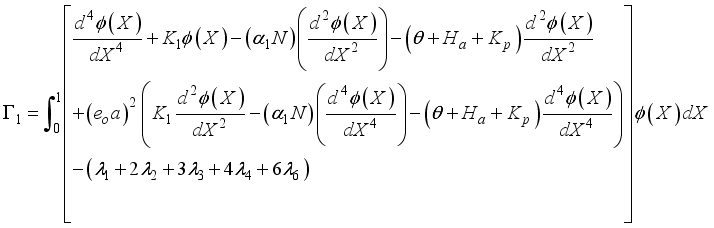 (25)
(25)  (26)
(26)  (27)
(27)  (28)
(28)  (29)
(29)  (30)
(30)  (31)
(31)  (32)
(32)  (33)
(33)  (34)
(34)  (35)
(35)  (36)
(36)  , is the first approximation answer. With ω representing the unknown angular frequency, the first solution can be considered to be as follows:
 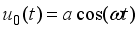 . Substituting
  into equation (36) yields:
  (37)
(37)  (38)
(38) 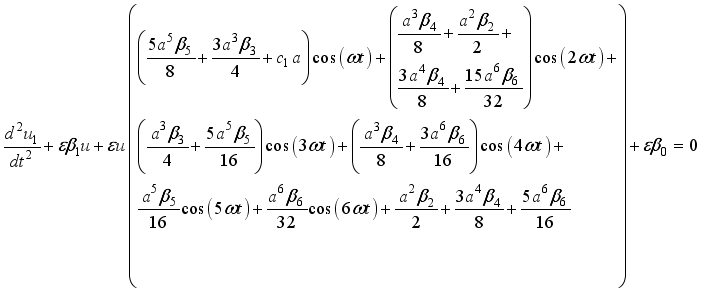 (39)
(39)  (40)
(40)  (41)
(41) 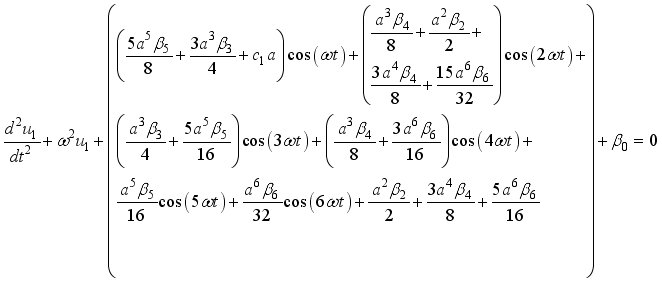 (42)
(42)  exists in equation (42), the final solution will contain the secular term,
  . As a result, this term's coefficient in (42) ought to be zero, giving us:
 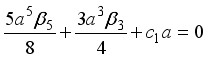 (43)
(43) 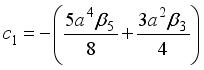 (44)
(44)  =1,
=1, 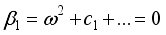 (45)
(45)  into equation (45), gives:
 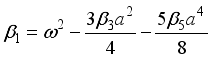 (46)
(46) 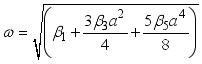 (47)
(47) 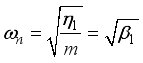 (48)
(48) 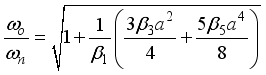 (49)
(49)  gives;
 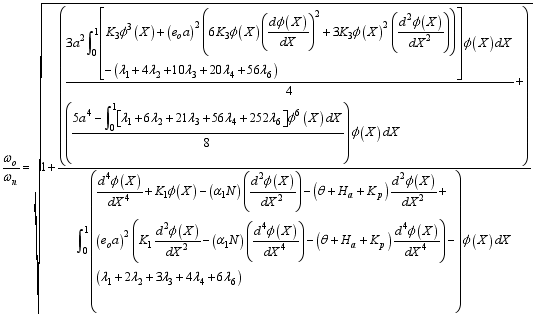 (50)
(50)  is obtained as:
 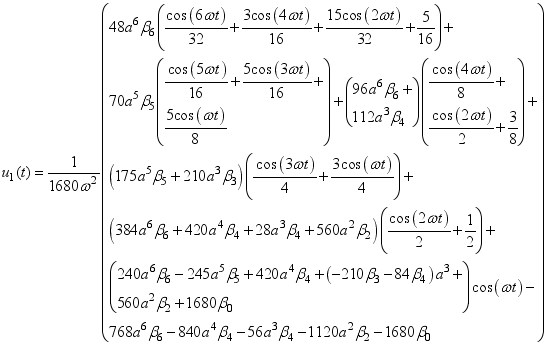 (51)
(51)  (52)
(52)  gives:
 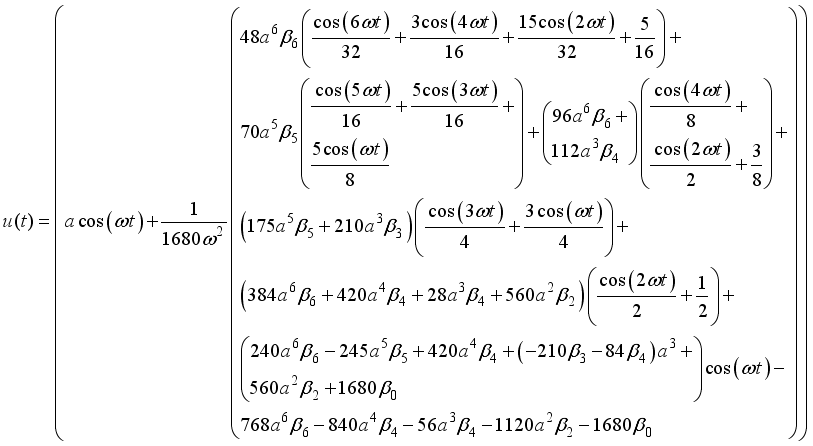 (53)
(53) 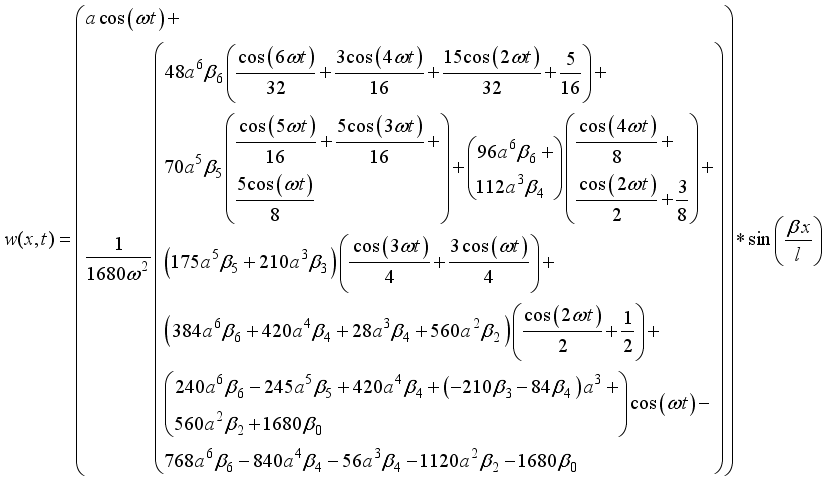 (54)
(54) 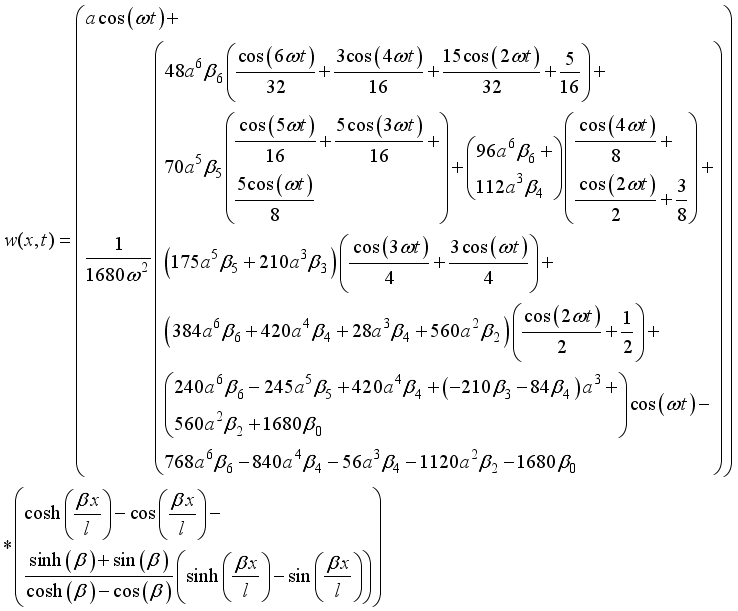 (55)
(55) 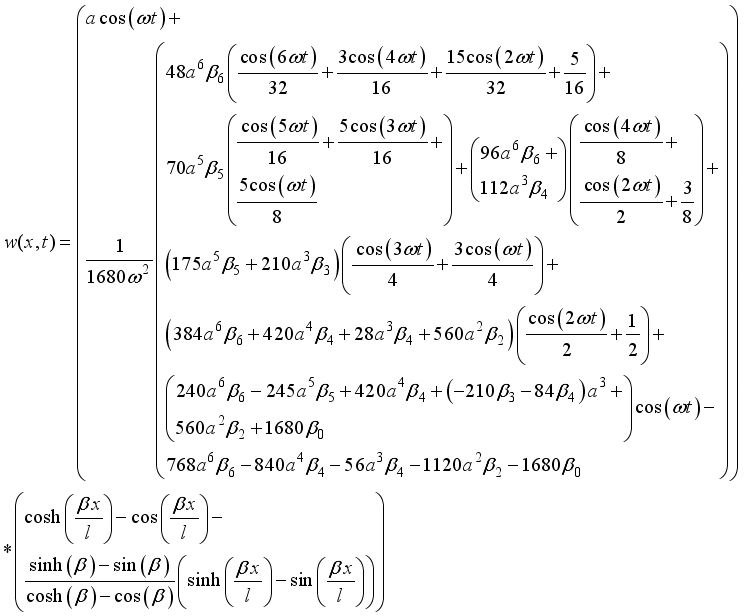 (56)
(56) 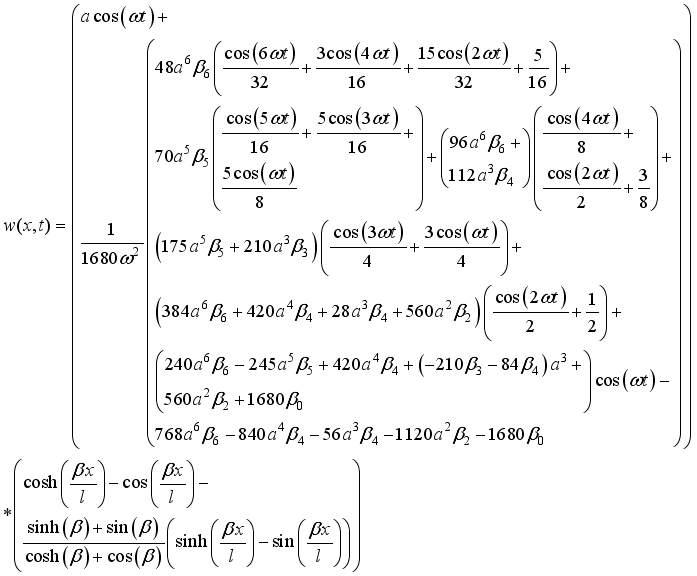 (57)
(57) 
SWCNT | Single-Walled Carbon Nanotube |
CNTs | Carbon Nanotube |
SWNT | Single-Walled Nanotube |
DWCNTs | Double-Walled Carbon Nanotube |
PDE | Partial Differential Equation |
NTRC | Nanotube Reinforcement Composites |
ODE | Ordinary Differential Equation |
| [1] | Abubakar, E. H., Sobamowo, M. G., Sadiq M. O., Yinusa A. A. (2023) Nonlinear Vibration Analysis of Nanotubes in A Magneto-Thermal-Electrostatic Environment under The Influence of Casimir Force, Journal of Nanomaterials and Devices, 1(1). |
| [2] | Anh N. D. and Hieu D. V. (2021) Nonlinear Vibration of Nonlocal Strain Gradient Nanotubes Under Longitudinal Magnetic Field, Vietnam Journal of Mechanics, Vietnam Academy of Science and Technology, 1-23, |
| [3] | Belhadj A., Boukhalfa A., Belalia S. A., (2017) Free vibration modelling of single-walled carbon nanotubes using the differential quadrature method, Mathematical Modelling of Engineering Problems, 4(1), 33-37, |
| [4] | E H Abubakar, M G Sobamowo, M O Sadiq, A A Yinusa (2023) Vibration of Single-walled Carbon Nanotube Resting on Elastic Foundation with Magnetic and Thermal Effects under the Influence of Casimir Force, J Nanosci Technol 1(1) 103. |
| [5] | Egbunu H. Abubakar, Gbeminiyi M. Sobamowo, Obanishola M. Sadiq, Ahmed A. Yinusa (2024), Dynamic and Instability Analysis of Single Walled Carbon Nanotubes with Geometrical Imperfections Resting on Elastic Medium in a Magneto-Thermally-Electrostatic Environment with Impact of Casimir Force using Homotropy Perturbation Method, Engineering Today. |
| [6] | Hosseini M., Sadeghi-Goughari M., Atashipour S. A., Eftekhari M. (2014) Vibration analysis of single-walled carbon nanotubes conveying nanoflow embedded in a viscoelastic medium using modified nonlocal beam model, Arch. Mech., 66, 4, 217–244. |
| [7] | Matteo Strozzi, Isaac E. Elishakoff, Michele Bochicchio, Marco Cocconcelli, Riccardo Rubini 1 and Enrico Radi (2024) Nonlocal Strain Gradient Anisotropic Elastic Shell Model for Vibration Analysis of Single‒Walled Carbon Nanotubes. |
| [8] | Mustafa Oguz Nalbant, Süleyman Murat Bağdatli, Ayla Tekin (2023), Investigation of Free Vibrations of Stepped Nanobeam Embedded in Elastic Foundation, 5th International Conference on Applied Engineering and Natural Sciences July 10-12: Konya, Turkey. |
| [9] | Muzamal Hussain and Muhammad Nawaz Naeem (2017), Vibration analysis of single-walled carbon nanotubes using wave propagation approach, Mech. Sci., 8, 155–164. |
| [10] | Rafiu Olalekan Kuku, Nurudeen Adekunle Raji and Gbeminiyi Sobamowo (2024) Analytical Investigations of Thermal-Magnetic Effects on Nonlinear Vibration of Carbon Nanotube in a Multi-layer Elastic Media using Differential Transformation Method, World Scientific News 192, 1-21. |
| [11] | Ramgopal Reddy B., Ramji K. and Satyanarayana B. (2011) Free Vibration Analysis of Carbon Nanotube Reinforced Laminated Composite Panels, International Journal of Mechanical and Mechatronics Engineering 5(8) 1616-1620. |
| [12] | Ravi Kumar B., (2017) Nonlocal Vibration Analysis of Fluid Conveying Single-Walled Carbon Nanotube with Magnetic Effects, Rasayan J. Chem., 10(2), 643-651 |
| [13] | Salvatore Brischetto, Francesco Tornabene, Nicholas Fantuzzi and Michele Bacciocchi (2015) Refined 2D and Exact 3D Shell Models for the Free Vibration Analysis of Single- and Double-Walled Carbon Nanotubes, Technologies, 3, 259-284, |
| [14] | Shaba A. I., Jiya M., Aiyesimi Y. M. and Mohammed A. A. (2021), Vibration of Single – Walled Carbon Nanotube on a Winkler Foundation with Magnetic Field Effect, Science World Journal, 16(4), 402-406. |
| [15] | Shota Kuwahara, Yuki Kuwahara and Hisanori Shinohara (2014) Quantitative Analysis of Isolated Single-Wall Carbon Nanotubes with Their Molar Absorbance Coefficients, Journal of Nanomaterials Vol. 2014, 7, |
| [16] | Subrat Kumar Jena and Chakraverty S., (2018) Free Vibration Analysis of Single Walled Carbon Nanotube with Exponentially Varying Stiffness, Curved and Layer. Struct., 5, 201–212, |
| [17] | Subrat Kumar Jena, Chakraverty S., Mohammad Malikan, Francesco Tornabene (2019) Stability Analysis of Single-Walled Carbon Nanotubes Embedded in Winkler Foundation Placed in a Thermal Environment Considering the Surface Effect Using a New Refined Beam Theory, Mechanics Based Design of Structures and Machines, 1-27, |
| [18] | Subrat Kumar Jena, Chakraverty S., Mohammad Malikan, Hamid Mohammad-Sedighi, (2020), Hygro-Magnetic Vibration of The Single-Walled Carbon Nanotube with Nonlinear Temperature Distribution Based on A Modified Beam Theory and Nonlocal Strain Gradient Model, International Journal of Applied Mechanics, 1-25, |
| [19] | Yinusa A. A., Sobamowo M. G., Adelaja A. O., Ojolo S. J., Waheed M. A., Usman M. A., Antonio Marcos de Oliveira Siqueira, Júlio C´esar Costa Camposf, Ridwan Ola-Gbadamosi (2024) Numerical investigation on the thermal-nanofluidic flow induced transverse and longitudinal vibrations of single and multi-walled branched nanotubes resting on nonlinear elastic foundations in a magnetic environment, Partial Differential Equations in Applied Mathematics 9, 100602, |
APA Style
Abubakar, H. E., Yinusa, A. A., Sobamowo, M. G., Sadiq, O. M. (2025). Nonlinear Vibration of Single-Walled Carbon Nanotubes on Winkler and Pasternak Foundations in a Magneto-Thermal Environment Under the Influence of Casimir Force. Engineering Science, 10(2), 32-58. https://doi.org/10.11648/j.es.20251002.12
ACS Style
Abubakar, H. E.; Yinusa, A. A.; Sobamowo, M. G.; Sadiq, O. M. Nonlinear Vibration of Single-Walled Carbon Nanotubes on Winkler and Pasternak Foundations in a Magneto-Thermal Environment Under the Influence of Casimir Force. Eng. Sci. 2025, 10(2), 32-58. doi: 10.11648/j.es.20251002.12
AMA Style
Abubakar HE, Yinusa AA, Sobamowo MG, Sadiq OM. Nonlinear Vibration of Single-Walled Carbon Nanotubes on Winkler and Pasternak Foundations in a Magneto-Thermal Environment Under the Influence of Casimir Force. Eng Sci. 2025;10(2):32-58. doi: 10.11648/j.es.20251002.12
@article{10.11648/j.es.20251002.12,
  author = {Haruna Egbunu Abubakar and Ahmed Amoo Yinusa and Musbau Gbeminiyi Sobamowo and Obanishola Mufutau Sadiq},
  title = {Nonlinear Vibration of Single-Walled Carbon Nanotubes on Winkler and Pasternak Foundations in a Magneto-Thermal Environment Under the Influence of Casimir Force
},
  journal = {Engineering Science},
  volume = {10},
  number = {2},
  pages = {32-58},
  doi = {10.11648/j.es.20251002.12},
  url = {https://doi.org/10.11648/j.es.20251002.12},
  eprint = {https://article.sciencepublishinggroup.com/pdf/10.11648.j.es.20251002.12},
  abstract = {Nanotubes are known to have the strongest and stiffest fibers with exceptional tensile strength and higher modulus of elasticity, researchers have been very interested in studying their nonlinear vibrations. Nonetheless, using nanotubes to partially substitute reinforcing material has emerged as a revolutionary approach for applications of the future. This work examines the nonlinear vibration study of single-walled carbon (NTs) with geometric imperfection supported on linear and nonlinear Winkler and Pasternak Foundations in a thermal-magnetic-electrostatic environment under the influence of Casimir Force. The nonlinear mathematical model for this work is formulated using the Hamiliton principle, Euler-Bernoulli elasticity theory, and non-local elasticity beam theory. The Galerkin decomposition approach is used directly to break down the nonlinear partial differential equation of motions into two separate components, that is spatial and temporal parts of nonlinear duffing equations of motions. An approximate analytical expression of the fundamental natural frequency is presented by modern asymptotic approach namely Iteration Perturbation Method (IPM). The method is used to solve the resulting nonlinear mathematical model and the following solutions were obtained that is the natural frequency of vibration, nonlinear frequency ratio and dynamic response analysis. Moreso, parametric study was conducted on the obtained semi-analytical solutions and the effects of the following parameters such as magnetic, thermal, electrostatic force, Van der Waals force, Casimir force, linear foundation, nonlinear foundation, Pasternak foundation and mass on stability and dynamic responses on four different boundary conditions considered. Afterwards, the outcomes are then compared with existing literature and found to be completely consistent.
},
 year = {2025}
}
TY  - JOUR
T1  - Nonlinear Vibration of Single-Walled Carbon Nanotubes on Winkler and Pasternak Foundations in a Magneto-Thermal Environment Under the Influence of Casimir Force

AU  - Haruna Egbunu Abubakar
AU  - Ahmed Amoo Yinusa
AU  - Musbau Gbeminiyi Sobamowo
AU  - Obanishola Mufutau Sadiq
Y1  - 2025/04/29
PY  - 2025
N1  - https://doi.org/10.11648/j.es.20251002.12
DO  - 10.11648/j.es.20251002.12
T2  - Engineering Science
JF  - Engineering Science
JO  - Engineering Science
SP  - 32
EP  - 58
PB  - Science Publishing Group
SN  - 2578-9279
UR  - https://doi.org/10.11648/j.es.20251002.12
AB  - Nanotubes are known to have the strongest and stiffest fibers with exceptional tensile strength and higher modulus of elasticity, researchers have been very interested in studying their nonlinear vibrations. Nonetheless, using nanotubes to partially substitute reinforcing material has emerged as a revolutionary approach for applications of the future. This work examines the nonlinear vibration study of single-walled carbon (NTs) with geometric imperfection supported on linear and nonlinear Winkler and Pasternak Foundations in a thermal-magnetic-electrostatic environment under the influence of Casimir Force. The nonlinear mathematical model for this work is formulated using the Hamiliton principle, Euler-Bernoulli elasticity theory, and non-local elasticity beam theory. The Galerkin decomposition approach is used directly to break down the nonlinear partial differential equation of motions into two separate components, that is spatial and temporal parts of nonlinear duffing equations of motions. An approximate analytical expression of the fundamental natural frequency is presented by modern asymptotic approach namely Iteration Perturbation Method (IPM). The method is used to solve the resulting nonlinear mathematical model and the following solutions were obtained that is the natural frequency of vibration, nonlinear frequency ratio and dynamic response analysis. Moreso, parametric study was conducted on the obtained semi-analytical solutions and the effects of the following parameters such as magnetic, thermal, electrostatic force, Van der Waals force, Casimir force, linear foundation, nonlinear foundation, Pasternak foundation and mass on stability and dynamic responses on four different boundary conditions considered. Afterwards, the outcomes are then compared with existing literature and found to be completely consistent.

VL  - 10
IS  - 2
ER  -
Civil and Environmental Engineering Department, University of Lagos, Lagos, Nigeria
Mechanical Engineering Department, University of Lagos, Lagos, Nigeria
Mechanical Engineering Department, University of Lagos, Lagos, Nigeria
Civil and Environmental Engineering Department, University of Lagos, Lagos, Nigeria
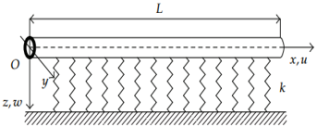
Figure 1. Model of an embedded single-walled carbon nanotube.
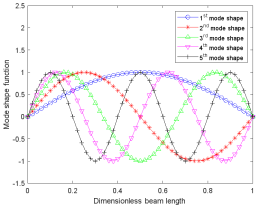
Figure 2. Pinned-pinned supports, illustrating mode number effects on mode form.
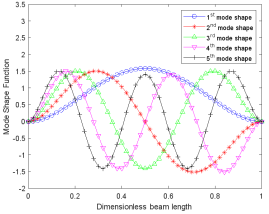
Figure 3. Clamped-clamped supports, illustrating mode number effects on mode form.
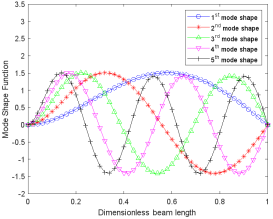
Figure 4. Clamped-pinned supports, illustrating mode number effects on mode form.
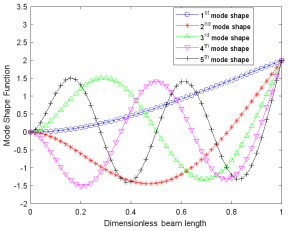
Figure 5. Clamped-free supports illustrating mode number effects on mode form.
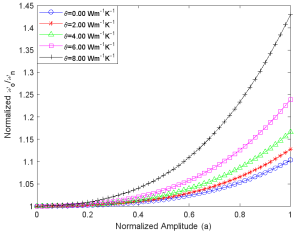
Figure 6. Illustrating thermal influencing stability response on SWCNT pinned-pinned supports.
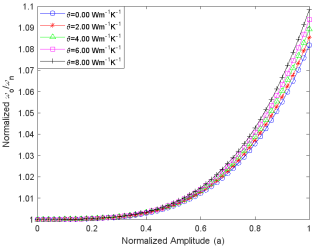
Figure 7. Illustrating thermal influencing stability response on SWCNT clamped-clamped supports.
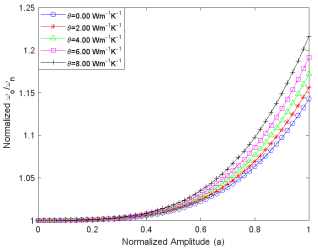
Figure 8. Illustrating thermal influencing stability response on SWCNT clamped-pinned supports.
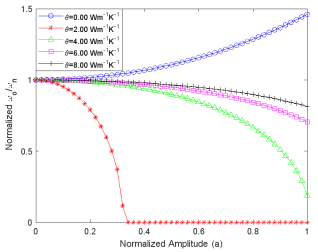
Figure 9. Illustrating thermal influencing stability response on SWCNT clamped-free supports.
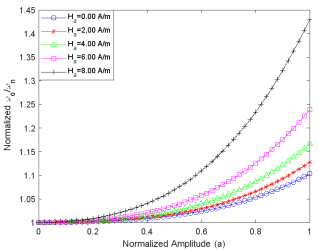
Figure 10. Illustrating magnetic influencing stability response on SWCNT pinned-pinned supports.
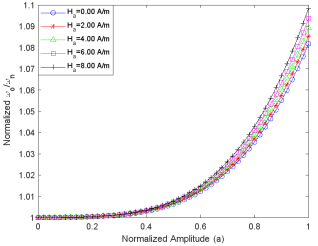
Figure 11. Illustrating magnetic influencing stability response on SWCNT clamped-clamped supports.
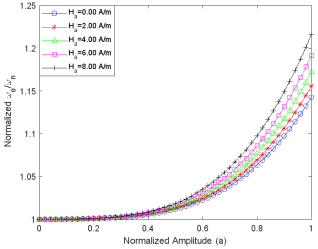
Figure 12. Illustrating magnetic influencing stability response on SWCNT clamped-pinned supports.
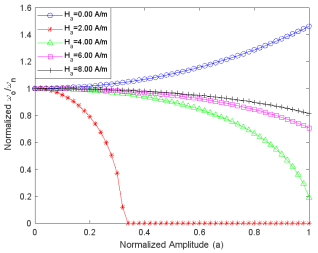
Figure 13. Illustrating magnetic influencing stability response on SWCNT clamped-free supports.
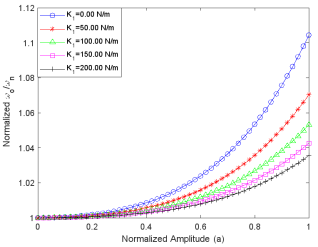
Figure 14. Linear foundation influencing stability response on SWCNT pinned-pinned.
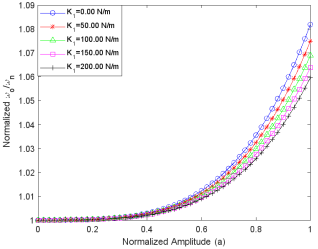
Figure 15. Linear foundation influencing stability response on SWCNT clamped-clamped.
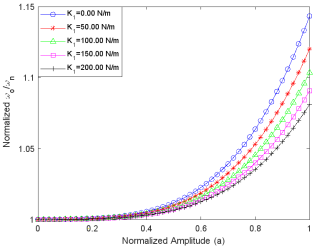
Figure 16. Linear foundation influencing stability response on SWCNT clamped-pinned.
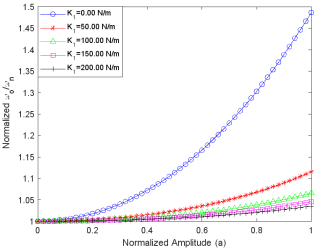
Figure 17. Linear foundation influencing stability response on SWCNT clamped-free.
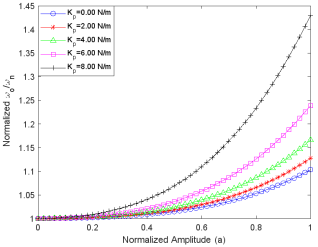
Figure 18. Pasternak foundation influencing stability response on SWCNT pinned-pinned.
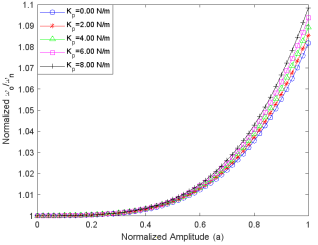
Figure 19. Pasternak foundation influencing stability response on SWCNT clamped-clamped.
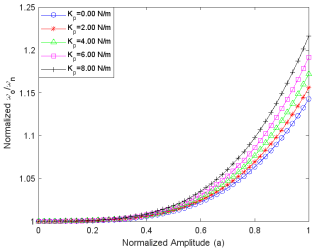
Figure 20. Pasternak foundation influencing stability response on SWCNT clamped-pinned.
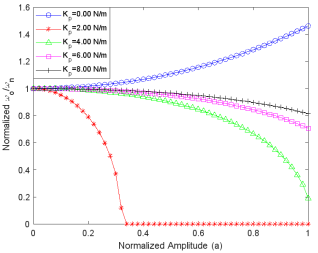
Figure 21. Pasternak foundation influencing stability response on SWCNT clamped-free.
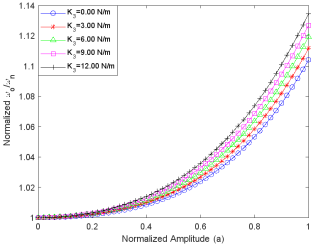
Figure 22. Nonlinear foundation influencing stability response on SWCNT pinned-pinned.
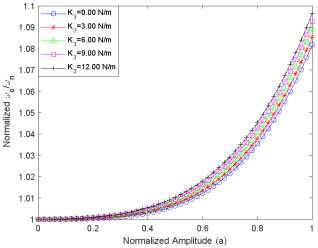
Figure 23. Nonlinear foundation influencing stability response on SWCNT clamped-clamped.
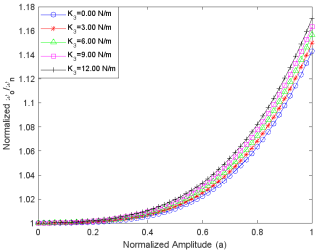
Figure 24. Nonlinear foundation influencing stability response on SWCNT clamped-pinned.
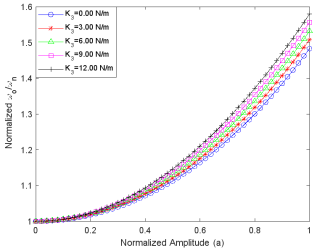
Figure 25. Nonlinear foundation influencing stability response on SWCNT clamped-free.
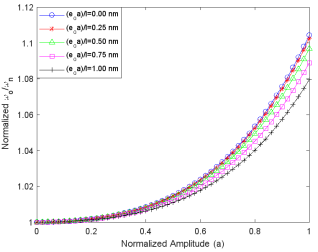
Figure 26. Nonlocal parameter influencing stability response on SWCNT pinned-pinned.
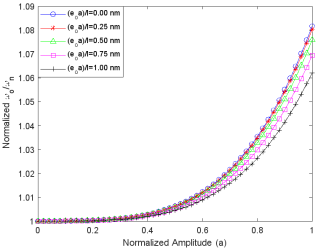
Figure 27. Nonlocal parameter influencing stability response on SWCNT clamped-clamped.
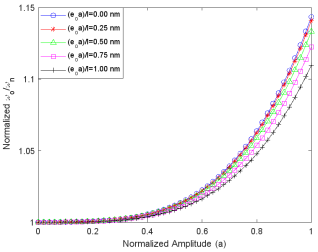
Figure 28. Nonlocal parameter influencing stability response on SWCNT clamped-pinned.
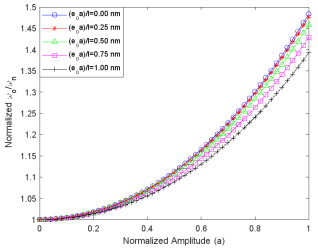
Figure 29. Nonlocal parameter influencing stability response on SWCNT clamped-free.
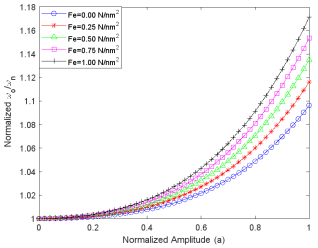
Figure 30. Electrostatic force influencing stability response on SWCNT pinned-pinned.
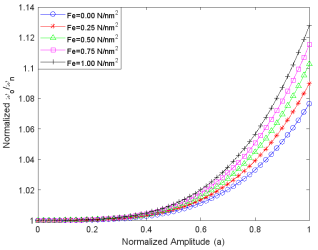
Figure 31. Electrostatic force influencing stability response on SWCNT clamped-clamped.
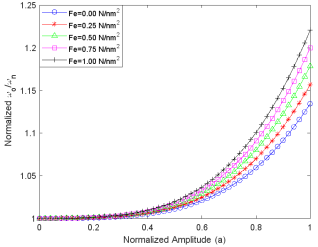
Figure 32. Electrostatic force influencing stability response on SWCNT clamped-pinned.
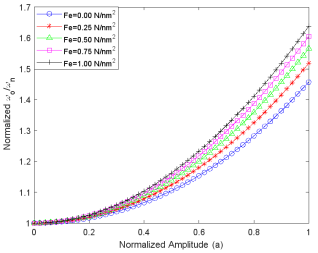
Figure 33. Electrostatic force influencing stability response on SWCNT clamped-free.
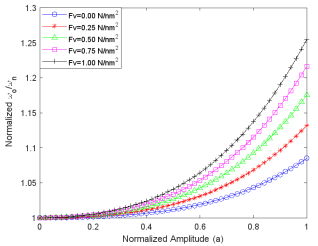
Figure 34. Van der Waals force influencing stability response on SWCNT pinned-pinned.
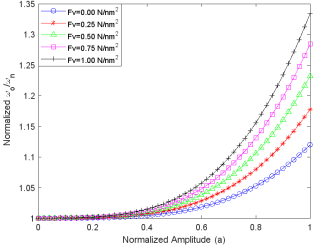
Figure 36. Van der Waals force influencing stability response on SWCNT clamped-pinned.
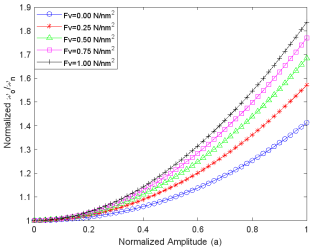
Figure 37. Van der Waals force influencing stability response on SWCNT clamped-free.
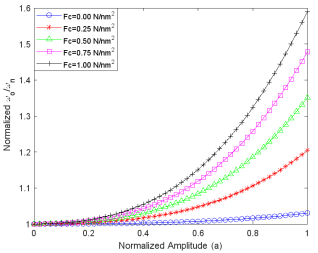
Figure 38. Casimir force influencing stability response on SWCNT pinned-pinned.
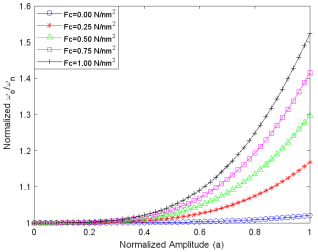
Figure 39. Casimir force influencing stability response on SWCNT clamped-clamped.
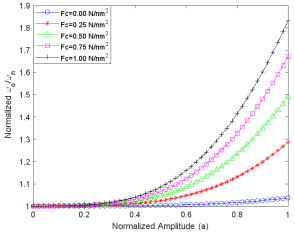
Figure 40. Casimir force influencing stability response on SWCNT clamped-pinned.
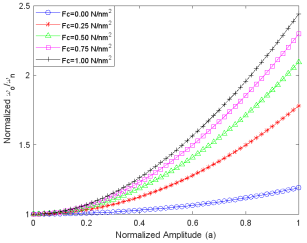
Figure 41. Casimir force influencing stability response on SWCNT clamped-free.
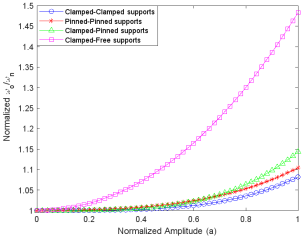
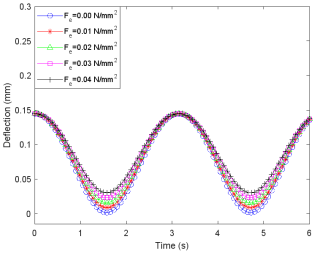
Figure 42. Illustrating how four different boundary conditions affects SWCNT stability response.
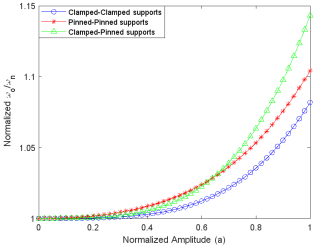
Figure 43. Illustrating how three different boundary conditions affects SWCNT stability response.
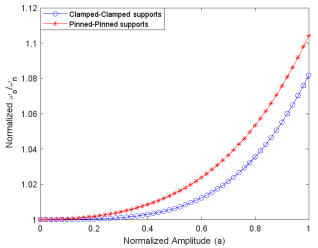
Figure 44. Illustrating how two different boundary conditions affects SWCNT stability response.
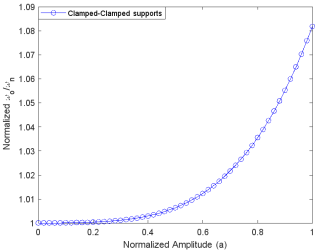
Figure 45. Illustrating how one different boundary condition affects SWCNT stability response.
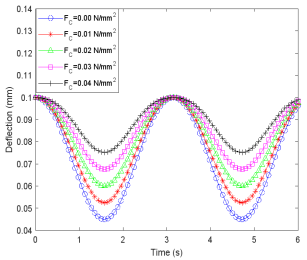
Figure 46. Casimir force influencing dynamic response on SWCNT pinned-pinned supports.
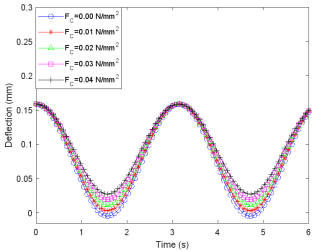
Figure 47. Casimir force influencing dynamic response on SWCNT clamped-clamped supports.
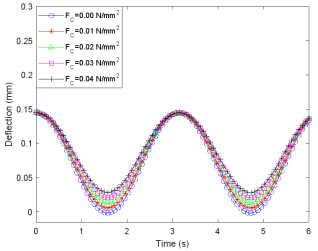
Figure 48. Casimir force influencing dynamic response on SWCNT clamped-pinned supports.
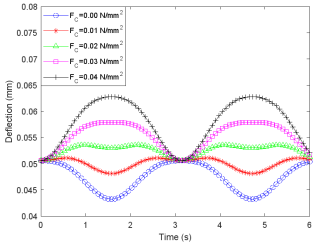
Figure 49. Casimir force influencing dynamic response on SWCNT pinned-free supports.
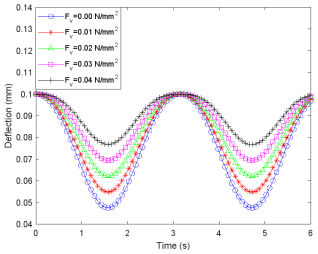
Figure 50. Van der Waals force influencing dynamic response SWCNT pinned-pinned.
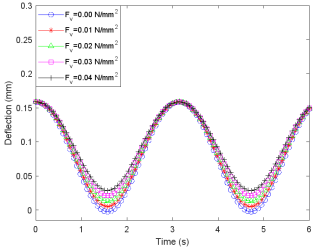
Figure 51. Van der Waals force influencing dynamic response SWCNT clamped-clamped.
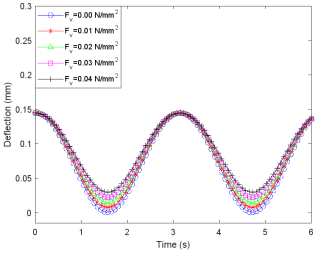
Figure 52. Van der Waals force influencing dynamic response SWCNT clamped-pinned.
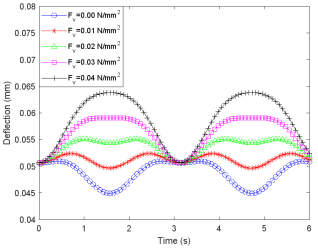
Figure 53. Van der Waals force influencing dynamic response SWCNT clamped-free.
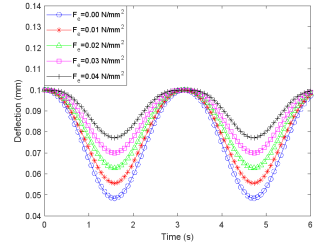
Figure 54. Electrostatic force influencing dynamic response SWCNT pinned-pinned supports.
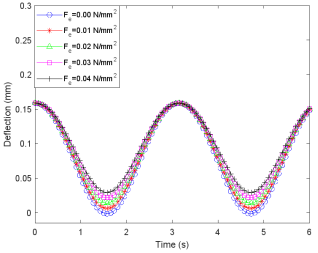
Figure 55. Electrostatic force influencing dynamic response SWCNT clamped-clamped supports.
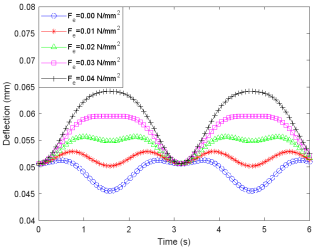
Figure 57. Electrostatic force influencing dynamic response SWCNT clamped-free supports.
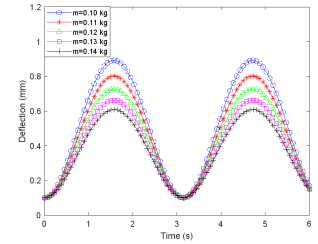
Figure 58. How mass affects dynamic response on pinned-pinned supports.
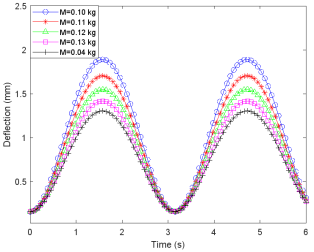
Figure 59. How mass affects dynamic response on clamped-clamped supports.
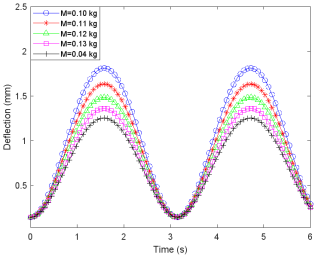
Figure 60. How mass affects dynamic response on clamped-pinned supports.
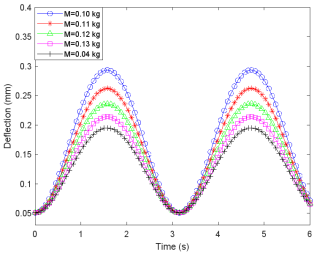
Figure 61. How mass affects dynamic response on clamped-free supports.

Information



 Share This Article
 Twitter
 Linked In
 Facebook


 in power of one yield:
  Copy
Copy Download